
Exploring the Fascinating Variety of Sphynx Cat Coats and Colors
- unfurgettablesphyn
- Mar 15
- 3 min read
Sphynx cats are famous for their unique appearance, often described as hairless or nearly hairless. Yet, many people do not realize that these cats actually come in a surprising range of coat types and colors. Understanding the different varieties can deepen your appreciation for this breed and help you recognize the subtle beauty that lies beneath their smooth skin. This article explores the fascinating diversity of Sphynx cat coats and colors, revealing what makes each one special.
What Defines a Sphynx Cat’s Coat
Despite their reputation for being hairless, Sphynx cats are not completely without fur. Their coat varies from almost no hair to a fine, peach-fuzz-like covering. This fuzz can affect how their skin feels and looks, and it also influences the way their colors appear.
Hairless or Nearly Hairless: Most Sphynx cats have a very thin layer of downy fuzz that feels like suede or warm peach skin.
Chamois Coat: This is a soft, fine coat that covers the body lightly, giving the cat a velvety texture.
Brush Coat: Some Sphynx cats have a slightly longer, wiry coat that stands up, resembling a brush.
Velour Coat: This rare coat type is soft and plush, with a gentle sheen.
The presence and type of coat can vary even within the same litter, making each Sphynx cat unique.
Understanding Sphynx Cat Colors
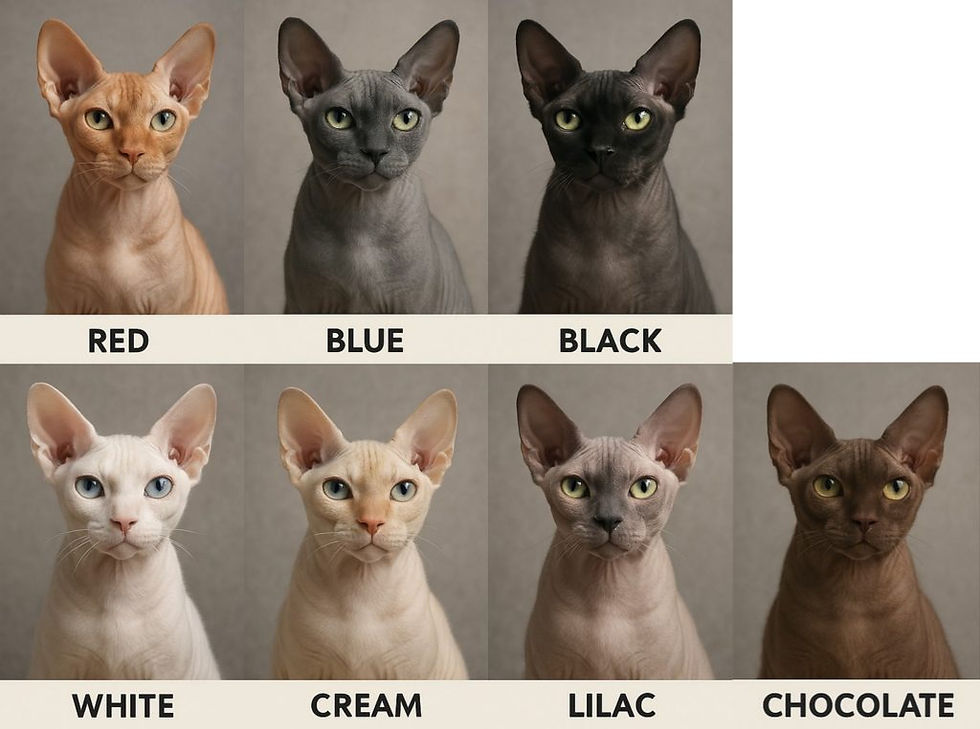
Sphynx cats display a wide range of colors and patterns, which become visible through their skin. The color is determined by the pigmentation of their skin and the tiny hairs they have. Here are the main color categories:
Solid Colors
Solid colors cover the entire body uniformly. Common solid colors include:
Black: Deep, rich pigmentation that can sometimes appear shiny.
White: Pure white skin with no pigmentation.
Blue: A soft, slate-gray tone.
Red: Warm orange or reddish hues.
Cream: Pale, yellowish tones.
Patterns and Markings
Sphynx cats can also have various patterns that add to their visual appeal:
Tabby: Classic stripes or swirls visible on the skin, often in shades of brown, gray, or red.
Tortoiseshell: A mix of black and red patches, sometimes with cream or white.
Pointed: Darker colors on the ears, nose, paws, and tail, similar to Siamese cats.
Bicolor: Two distinct colors, often white combined with another color.
Unique Color Effects
Some Sphynx cats show special color effects due to their skin and coat interaction:
Mink: A soft, muted color with a subtle gradient, often seen in pointed cats.
Sepia: Darker overall tone with a warm brownish tint.
Smoke: A dark base color with lighter tips, giving a smoky appearance.
How Genetics Influence Sphynx Colors and Coats
The variety in Sphynx coats and colors comes from complex genetics. Several genes control hair length, texture, and pigmentation. Breeders carefully select cats to produce specific colors and coat types, but the results can be unpredictable.
The hairless gene is recessive, so both parents must carry it for kittens to be hairless.
Color genes determine the skin pigmentation and the pattern of any fuzz.
Modifier genes influence the texture of the coat, from hairless to velour.
Because of this genetic complexity, even siblings can look very different.
Caring for Different Sphynx Coats and Colors
The type of coat a Sphynx cat has affects its care needs. Hairless or nearly hairless cats require regular skin cleaning to remove oils and prevent irritation. Cats with a velour or brush coat may need gentle brushing to keep their skin healthy.
Skin Care: Bathing every 1-2 weeks helps maintain clean skin.
Sun Protection: Light-colored or thin-coated cats are more prone to sunburn.
Temperature Sensitivity: Cats with less fuzz need extra warmth in cold weather.
Understanding your cat’s coat type and color can help you provide the best care.
Why Sphynx Coat and Color Variety Matters
The variety in Sphynx coats and colors makes each cat a living work of art. It also reflects the breed’s rich genetic background and the dedication of breeders who maintain these traits. For owners, knowing about these differences enhances the bond with their pet and helps in recognizing health or grooming needs.
Whether you prefer a classic black Sphynx or a rare velour-coated cream cat with tortoiseshell markings, the diversity within this breed offers something for every cat lover.


Comments